





















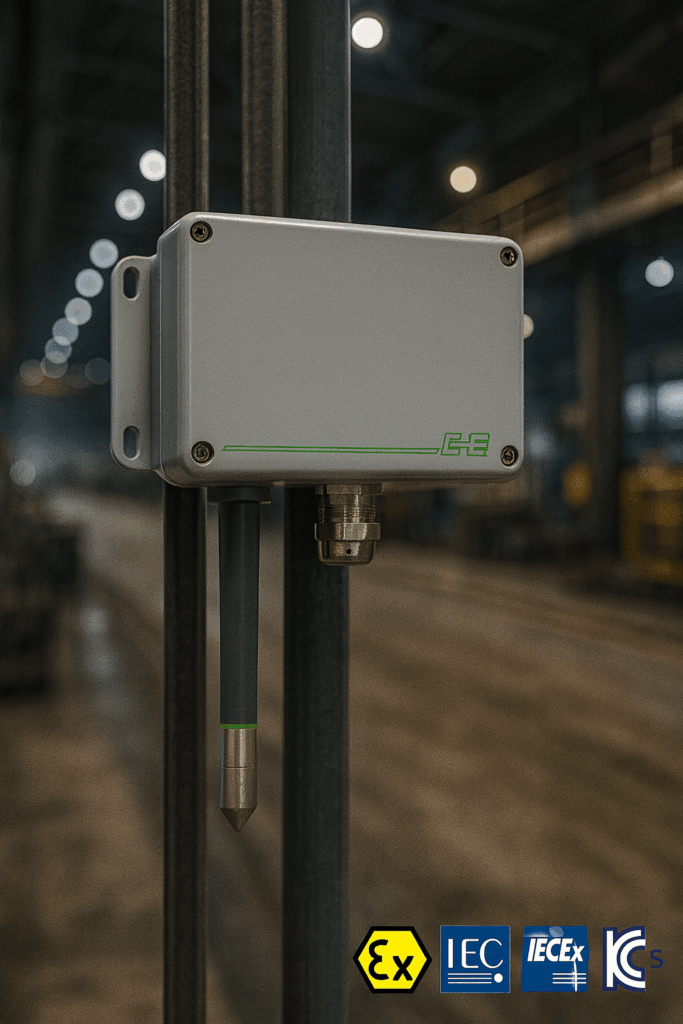
Intrinsically safe temperature sensors play a critical role in hazardous-area operations where flammable gases, vapors, or dusts can turn a standard measurement device into an ignition source. Industries such as oil & gas, chemical production, refining, and manufacturing rely on sensors that are specifically engineered to operate safely in ATEX/IECEx certified environments.
In this guide, we break down everything you need to know about choosing the right intrinsically safe temperature sensor, including certifications, pricing, industrial use cases, and which models best support demanding hazardous-area applications.
Shop Intrinsically Safe Temperature Sensors
Browse certified ATEX/IECEx temperature and humidity sensors designed for hazardous industrial environments.
What Is an Intrinsically Safe Temperature Sensor?
An intrinsically safe temperature sensor is a measurement device designed to monitor temperature in hazardous environments without creating sparks, heat, or electrical energy capable of causing ignition. Rather than relying on heavy explosion-proof housings, intrinsically safe (IS) sensors limit energy at the circuit level so the device cannot ignite flammable atmospheres.
These sensors are widely used in:
-
Process manufacturing
-
Petrochemical plants
-
Oil & gas upstream and downstream operations
-
Pharmaceutical production
-
Grain handling and food processing
-
Hazardous storage and confined spaces
These sensors are available with certifications for various hazardous locations, such as ATEX/IECEx Zone 0, 1, or 2, and NEC/CEC Class I, Division 1 or 2, depending on the specific model and its associated system requirements.
Explore Measurement & Calibration Tools
Find certified measurement devices engineered for hazardous-area process safety.
How Do Intrinsically Safe Temperature Sensors Work?
Intrinsically safe temperature sensors operate on the principle of energy limitation. Electrical energy entering the device is restricted through:
-
Zener barriers
-
Galvanic isolators
-
Energy-limiting circuits
Even if the device fails, shorts, or is exposed to abnormal conditions, its circuitry cannot release enough heat or electrical energy to ignite a hazardous atmosphere.
Most IS temperature sensors use:
-
RTD elements (Pt100 or Pt1000)
-
Thermistors
-
Thermocouple inputs
-
Integrated digital temperature + humidity modules
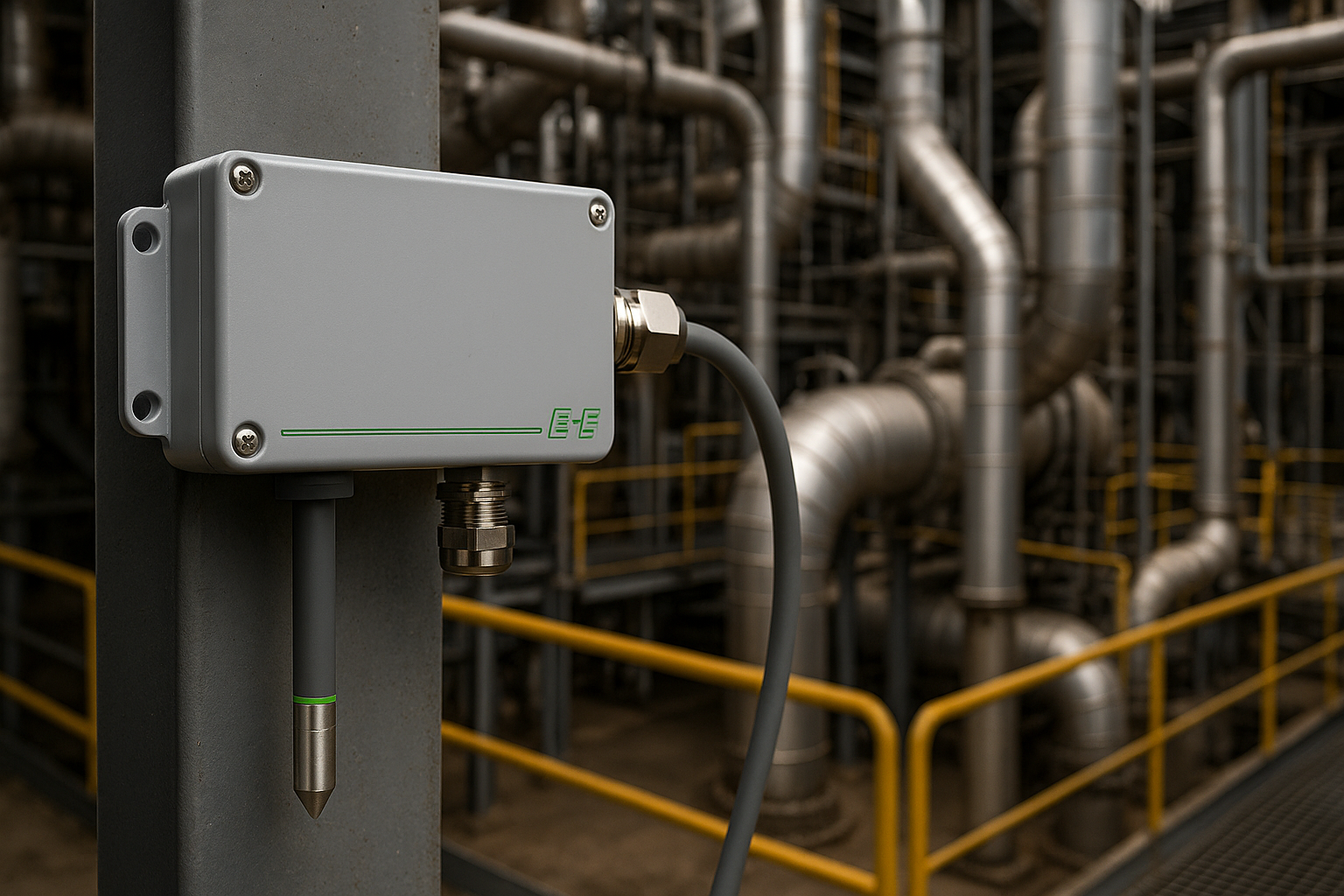
A leading example is the E+E Elektronik EE100Ex, an ATEX Zone 1 certified humidity/temperature sensor designed for hazardous industrial applications. This model uses energy-limited circuits and supports intrinsically safe power sources or Zener barriers.
What Certifications Are Required for an Intrinsically Safe Temperature Sensor?
Certification is one of the most important aspects when selecting an intrinsically safe sensor. Below are the major global certifications and what they mean.
ATEX Certification
ATEX is the European directive governing equipment used in explosive atmospheres. Temperature sensors typically fall under:
-
ATEX Zone 0 – Continuous presence of explosive atmosphere
-
ATEX Zone 1 – Likely presence during normal operation
-
ATEX Zone 2 – Presence only in abnormal situations
The E+E Elektronik EE100Ex featured on Intrinsically Safe Store is ATEX Zone 1 certified, meaning it is approved for locations where hazardous vapors or gases may be present during normal operating conditions.
IECEx Certification
IECEx is an international certification system harmonized with ATEX. IECEx requirements validate:
-
Design safety
-
Ignition testing
-
Energy limitation
-
Compliance with Ex standards
The EE100Ex is also IECEx certified, an international scheme recognized by over 30 member countries, facilitating its acceptance in markets like South America, the Middle East, and Asia-Pacific.
Temperature Class Ratings
Temperature class (T-rating) identifies the maximum surface temperature of a device. Hazardous-area gases each have an ignition temperature; the device surface must stay well below that threshold.
Typical ratings include:
-
T6 – max 85°C
-
T5 – max 100°C
-
T4 – max 135°C
The principle of intrinsic safety is designed to ensure the device’s surface temperature does not exceed its designated T-rating, even under specified fault conditions, preventing it from becoming an ignition source.
Understand Hazardous Location Safety Standards
Strengthen your knowledge with our essential guides on ATEX, IECEx, Class/Division ratings and intrinsically safe design.
What Applications Require an Intrinsically Safe Temperature Sensor?
Industries that contain flammable gases, vapors, or combustible dust rely on temperature sensors to monitor safety, process stability, and environmental conditions. Here are the most common applications.
Oil & Gas Operations
Temperature monitoring is essential in upstream, midstream, and downstream processes:
-
Tank farms
-
Wellheads
-
Gas compressors
-
Pump stations
-
Refinery units
-
LNG storage
Sensors like the EE100Ex allow measurement in areas where explosive atmospheres may form.
Process Manufacturing
Temperature affects chemical reactions, batch consistency, and safety. IS sensors are frequently used for temperature monitoring in applications such as:
-
Chemical reactors
-
Mixing areas
-
Solvent-based processes
-
Flammable storage rooms
Maintaining precise measurement prevents runaway reactions and ensures process reliability.
Pharmaceutical & Biotech
Cleanrooms that handle volatile solvents rely on certified sensors to safely control:
-
Temperature
-
Humidity
-
Dew point
-
Frost point
In industries with stringent quality standards like pharmaceuticals, certified sensors are used to monitor environmental conditions in areas governed by GMP or ISO classifications. A sensor like the EE100Ex can provide the necessary temperature and humidity data for these environments.
Food & Grain Processing
Combustible dust creates explosion hazards in:
-
Milling
-
Mixing
-
Packaging
-
Silos
Intrinsically safe sensors ensure dust does not ignite during routine monitoring.
Browse Power & Energy Solutions
Certified panels, distribution equipment, and power solutions for hazardous-area operations.
Featured Product: E+E Elektronik EE100Ex Intrinsically Safe Humidity/Temperature Sensor
The screenshot provided shows the E+E Elektronik EE100Ex, a flagship ATEX/IECEx temperature and humidity sensor used widely in hazardous and industrial markets.
Key Features
-
ATEX Zone 1 certified
-
IECEx certified
-
Measures relative humidity and temperature
-
Dew point (Td) and frost point (Tf) calculations
-
Suitable for intrinsically safe power or Zener barrier systems
-
IP65 enclosure
-
Durable sensing head for harsh industrial environments
Best For
-
Oil & gas
-
Chemical plants
-
Hazardous manufacturing
-
Petrochemical storage
-
Pharmaceutical production
Pricing
Based on the product page:
$2,610.77 USD (subject to change depending on configurations and region availability).
How Much Does an Intrinsically Safe Temperature Sensor Cost?
Pricing varies depending on certification, sensing technology, and environmental protection levels. Below is a general breakdown for hazardous-area temperature sensors.
Typical Price Ranges
| Sensor Type | Price Range | Notes |
|---|---|---|
| Basic IS temperature probe | $800–$1,500 | RTD/thermocouple, simple housing |
| Humidity + temperature sensor (IS) | $1,600–$3,000 | ATEX/IECEx, multi-variable sensing |
| Advanced industrial sensor | $2,500–$5,000 | Specialized process applications |
| EE100Ex (featured) | $2,610.77 | ATEX Zone 1 / IECEx, humidity + temperature |
What Affects Pricing?
Key factors influencing cost:
-
Hazardous area certification (ATEX, IECEx)
-
Sensor type (RTD vs digital module)
-
Measurement accuracy requirements
-
Housing materials (aluminum, stainless steel, polymer)
-
Environmental protection (IP65–IP67)
-
Additional measurement capability (humidity, dew point, frost point)
High-end IS sensors often combine temperature, humidity, and dew-point sensing in one certified system—reducing installation costs but increasing product price.
How to Choose the Right Intrinsically Safe Temperature Sensor
Choosing the right sensor depends on process requirements and environmental conditions.
Determine the Hazardous Zone
-
Zone 0: Continuous hazard
-
Zone 1: Likely hazard (The EE100Ex holds a Zone 1 certification)
-
Zone 2: Occasional hazard
Always start with the hazardous classification of the installation area.
Choose the Correct Measurement Parameters
Do you need:
-
Temperature only?
-
Temperature + humidity?
-
Dew point/frost point?
-
Digital or analog output?
For multi-parameter industrial applications, a device like the EE100Ex provides more value.
Check Environmental Ratings
Key enclosure ratings:
-
IP65/IP66 – washdown, dust protection
-
Corrosion-resistant housings
-
Temperature operating ranges
Key Considerations for Installation and Maintenance
Proper installation and routine maintenance are crucial for ensuring the long-term safety and accuracy of any intrinsically safe system. Simply selecting the right sensor is not enough; the entire loop, from the sensor to the control room, must adhere to strict safety standards.
Proper Wiring and Use of IS Barriers
The integrity of an intrinsically safe circuit depends on correct wiring and the use of an approved intrinsically safe barrier. Here are some key guidelines:
- Use Designated IS Cabling: Cables used for intrinsically safe circuits should be separated from non-IS wiring to prevent energy transfer. They are often colored light blue to make them easily identifiable.
- Correct Barrier Selection: The Zener barrier or galvanic isolator must be matched to the sensor and the specific hazardous area classification. The barrier’s entity parameters (voltage, current, power) must be compatible with the sensor’s requirements.
- Grounding: Proper grounding is essential, especially for Zener barriers, to ensure that excess energy is safely diverted in the event of a fault. Galvanic isolators do not typically require the same level of grounding.
Routine Maintenance and Calibration
To maintain certification and ensure reliable measurements, a regular maintenance schedule should be followed. This includes:
- Visual Inspection: Regularly check the sensor housing, cabling, and connections for any signs of physical damage, corrosion, or wear.
- Loop Integrity Checks: Periodically verify the integrity of the entire IS loop to ensure no unauthorized modifications have been made.
- Calibration: Depending on the application’s criticality, sensors should be calibrated according to the manufacturer’s recommendations or internal quality standards to ensure accuracy. The E+E Elektronik EE100Ex, for example, is designed for long-term stability but should be checked as part of a comprehensive safety program.
Integrating IS Sensors into Control Systems (PLC/DCS)
Intrinsically safe temperature sensors must reliably transmit data from the hazardous area to a safe-area control system, such as a PLC (Programmable Logic Controller) or DCS (Distributed Control System). The signal is typically transmitted via a 4-20mA analog output, which is the industry standard for process instrumentation.
The galvanic isolator or Zener barrier plays a dual role here. It not only limits the energy sent to the sensor but also passes the measurement signal back to the control system without interference. Some advanced isolators can also provide HART (Highway Addressable Remote Transducer) protocol pass-through, allowing for remote configuration and diagnostics of the sensor from the safety of the control room. This is particularly valuable for complex measurement and calibration devices operating in inaccessible locations.
Common Mistakes to Avoid When Selecting an IS Sensor
Choosing the wrong sensor or implementing it incorrectly can compromise safety and lead to operational failures. Here are common pitfalls to avoid:
- Mismatching Entity Parameters: Failing to ensure that the voltage (Ui), current (Ii), and power (Pi) of the sensor are compatible with the output parameters (Uo, Io, Po) of the IS barrier. This is a critical safety check.
- Ignoring the Temperature Class (T-Rating): Selecting a sensor with a T-rating that is too high for the specific flammable gas present in the area. The sensor’s maximum surface temperature must always be lower than the auto-ignition temperature of the hazardous substance.
- Confusing Intrinsically Safe with Explosion-Proof: Using an IS sensor where a more robust explosion-proof housing is required, or vice-versa. While both are for hazardous areas, they operate on different principles and are not interchangeable without a proper risk assessment.
- Neglecting IP Ratings: Overlooking the Ingress Protection (IP) rating required for the environment. A sensor installed in a wet or dusty location needs a high IP rating (e.g., IP65 or higher) to prevent internal damage, regardless of its IS certification.
Comparison Table: Intrinsically Safe Temperature Sensor Options
Below is a comparison of general sensor types including the EE100Ex.
| Feature | Basic IS Temperature Probe | IS Digital Temp Sensor | EE100Ex Humidity/Temp Sensor |
|---|---|---|---|
| ATEX/IECEx | Yes | Yes | Yes (Zone 1) |
| Measurement | Temperature | Temperature | Temp + RH + Td + Tf |
| Ideal For | Simple monitoring | Industrial control | Hazardous industrial environments |
| Enclosure | Stainless/Aluminum | Polymer/Metal | IP65-rated housing |
| Typical Price | $800–$1,500 | $1,200–$2,000 | $2,610.77 |
Need Help Selecting the Right Sensor?
Talk to our hazardous-area experts for guidance on ATEX/IECEx ratings, temperature ranges, and industrial requirements.
FAQs About Intrinsically Safe Temperature Sensors
Are intrinsically safe sensors the same as explosion-proof sensors?
No. Intrinsically safe sensors limit electrical energy to prevent ignition, while explosion-proof sensors contain explosions inside a housing. IS sensors are typically lighter and easier to install.
Can intrinsically safe temperature sensors be installed in Zone 1?
Yes. Many IS sensors—including the EE100Ex—are specifically certified for ATEX Zone 1 and IECEx environments.
Do I need a Zener barrier with an intrinsically safe sensor?
In most cases, yes. A Zener barrier or galvanic isolator ensures energy entering the sensor stays within safe limits.
Can these sensors measure dew point or frost point?
Some models, including the EE100Ex, calculate dew point (Td) and frost point (Tf) in addition to humidity and temperature.
Are intrinsically safe sensors suitable for outdoor use?
Yes, provided they have appropriate IP ratings. The EE100Ex is IP65, suitable for many outdoor and industrial environments.
Conclusion: Choosing the Best Intrinsically Safe Temperature Sensor
Selecting the right intrinsically safe temperature sensor depends on certification requirements, application conditions, and measurement needs. ATEX/IECEx sensors like the E+E Elektronik EE100Ex offer globally recognized safety approval, advanced multi-parameter measurement, and rugged construction for oil & gas, process manufacturing, chemical plants, and hazardous industrial sites.
For hazardous-area temperature and humidity monitoring solutions, browse the certified options available at Intrinsically Safe Store.