


















A Buyer’s Guide to Intrinsically Safe Infrared Thermometers
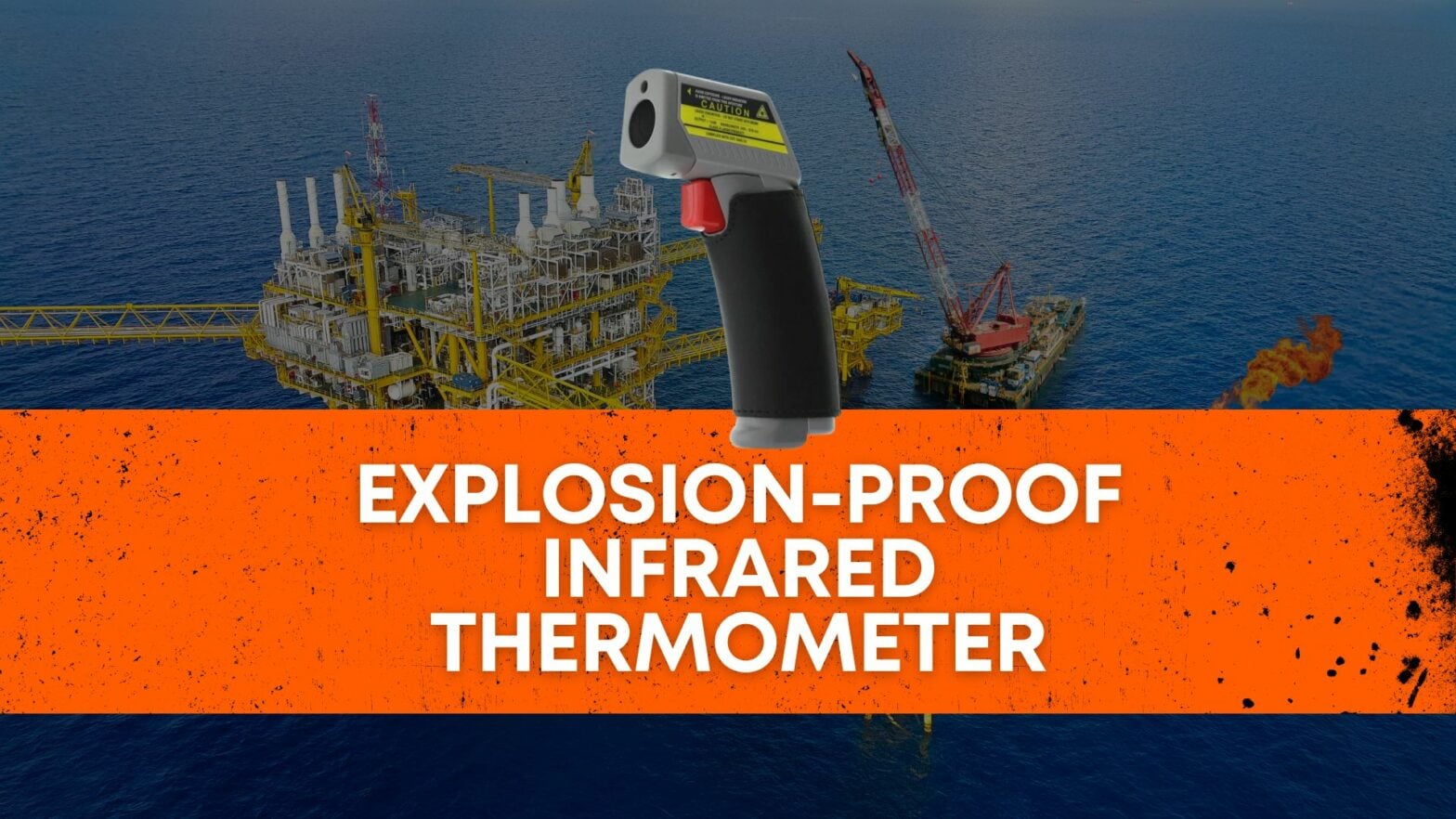
Looking for certified tools to ensure your hazardous area and improve your productivity? Non-contact infrared (IR) thermometers are essential for safely monitoring temperatures in environments where flammable gases, vapors, or dust are present. Here in this post, we will present to you the Ecom technology for the temperature meter, the Infrared Thermometer ex-MP4, and provide a guide to selecting the right device for your needs.
How Does Intrinsic Safety Work in an Infrared Thermometer?
While the term ‘explosion-proof’ is often used as a general category, this thermometer achieves safety through a specific protection method called Intrinsic Safety (IS). Unlike an explosion-proof enclosure which is built to contain an internal blast, an IS device is engineered to be incapable of causing one. This design principle ensures that the electrical and thermal energy within the device is kept so low that it cannot create a spark or a hot surface capable of igniting a flammable substance, even under fault conditions. This is achieved through current-limiting resistors, safety fuses, and other protective components that are part of its core design.
Key Certifications to Look For (ATEX/IECEx/Class I Division)
When selecting a thermometer for a hazardous area, certification is non-negotiable. Certification is the critical verification that a device has been tested to meet strict safety standards for a specific environment. The main certifications you will encounter are:
- ATEX: A mandatory European Union directive for equipment used in potentially explosive atmospheres. Look for markings like Zone 1, which indicates the device is safe for areas where an explosive atmosphere is likely to occur during normal operation.
- IECEx: An international certification system that provides a globally recognized standard for explosion-proof equipment. It simplifies international trade and ensures a high, uniform level of safety.
- Class/Division System: The standard used in North America. For example, Class I refers to flammable gases or vapors, while Division 1 is an area where these hazards are present under normal operating conditions. A Class I, Division 1 (C1D1) certification is one of the most common requirements in North American facilities.
Featured Product: Ecom Ex-MP4 an Infrared Thermometer
Ecom ex-MP4 a is a non-contact temperature meter, which means you can now obtain your temperature data even from a long distance. The non-contact infrared thermometer is also low maintenance, so there’s no wear and tear and no fixing or fastening points required. Ecom ex-MP4 is an ATEX Zone 1 certified intrinsically safe infrared thermometer. Its user-friendly interface and sturdy design make the non-contact infrared thermometer ideal for usage in hazardous areas. Due to its non-contact nature, it may now be used from a far distance. By measuring thermal radiation, it offers near-instant readings, providing a significant speed advantage over many contact thermometers. As bonus, the detector is low maintenance and non-invasive because it does not touch the thing or equipment being evaluated. Furthermore, this approach has no impact on the temperature of the object being evaluated.
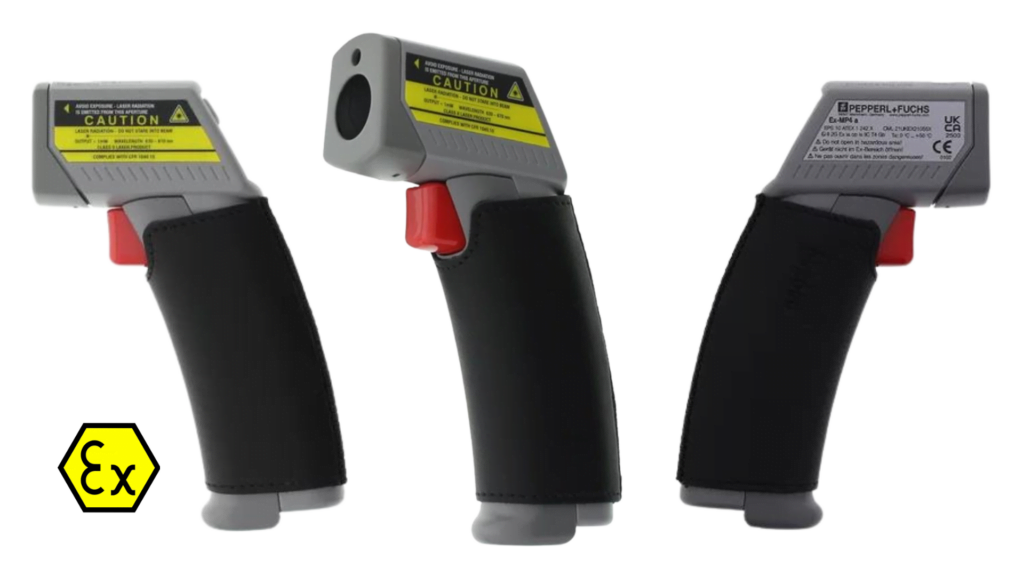
Features and Certifications
Check all the features and specifications of the Ecom infrared thermometer below:
- Extended measuring range: to +400 °C
- ATEX Zone 1
- Laser Class 2
- Easily measure hard-to-reach objects
- Laser target sighting
- Measurements of moving materials
- Certified for measuring into Zone 0 from a Zone 1 area
- Precise measurements with accuracy
More details from the product specification you can check here.
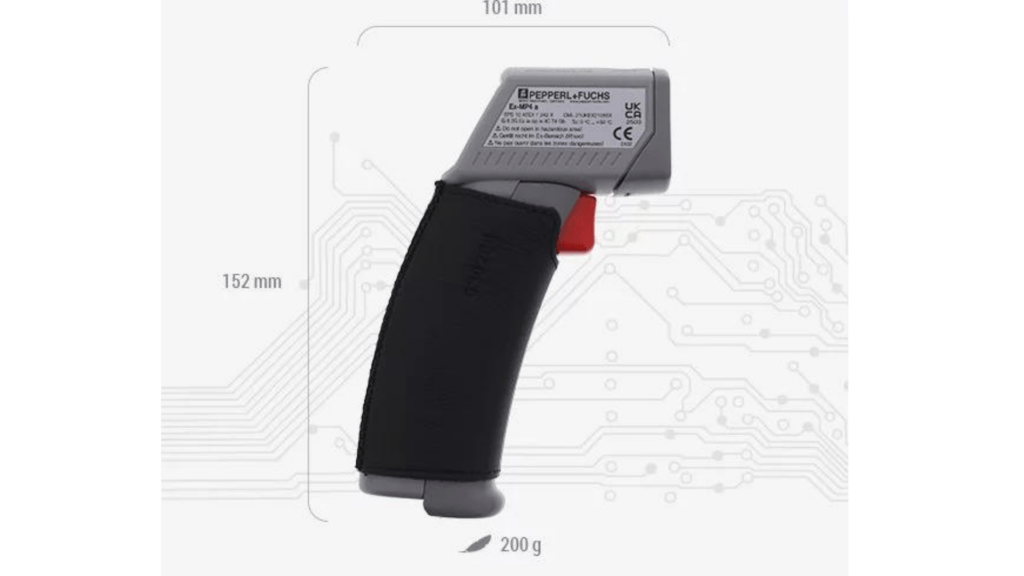
The Ex-MP4 is approved under ATEX EU certificate standards and the UKCA Ex certificate as well.
Top Use Cases for Explosion-Proof Infrared Thermometers
These specialized tools are critical for predictive maintenance and safety checks in a variety of industries. Common applications include:
- Oil & Gas: Monitoring pipeline, pump, and valve temperatures to detect potential leaks or blockages.
- Chemical Processing: Checking reactor vessels and distillation columns for hot spots without risk of ignition.
- Pharmaceuticals: Ensuring temperature stability in mixing processes involving flammable solvents.
- Paint & Coatings: Monitoring curing ovens and mixing vats where flammable vapors are present.
- Power Generation: Inspecting transformers, switchgear, and turbines in classified locations.
How to Choose the Right Model
Selecting the correct IR thermometer depends on your specific operational needs. Consider these key factors:
- Required Certifications: Does your facility require ATEX, IECEx, or Class/Division ratings? Match the device to your environment’s specific zone or division classification.
- Temperature Range: Ensure the device’s measurement range (e.g., -20°C to +400°C) covers the temperatures of the equipment you need to monitor.
- Distance-to-Spot (D:S) Ratio: A higher ratio (like 50:1) allows you to measure smaller targets from a safer distance, which is critical when inspecting hard-to-reach or extremely hot components.
- Accuracy: Check the manufacturer’s specifications for measurement accuracy (e.g., ±1% or ±1°C) to ensure it meets your process control requirements.
Frequently Asked Questions
What is the main difference between an intrinsically safe and an explosion-proof thermometer?
Intrinsic Safety (IS) prevents explosions by limiting the electrical and thermal energy within a device to a level below that which can ignite a specific hazardous atmospheric mixture. Explosion-proof enclosures, on the other hand, are designed to contain an internal explosion and prevent it from propagating to the outside environment. IS devices are generally lighter and easier to maintain.
Can I use an ATEX Zone 1 rated thermometer in a Zone 2 area?
Yes. Equipment certified for a higher-risk zone can be used in a lower-risk zone. A Zone 1 certified device is safe for use in areas where an explosive atmosphere is likely to occur in normal operation, making it more than suitable for Zone 2, where such an atmosphere is unlikely. However, you must still ensure the device’s gas group and temperature class are appropriate for the specific hazard in the Zone 2 area.
What does the distance-to-spot (D:S) ratio mean?
The distance-to-spot ratio (e.g., 50:1) tells you the size of the surface area being measured from a specific distance. A 50:1 ratio means that from 50 inches away, the thermometer is measuring the temperature of a 1-inch diameter circle. A higher ratio allows for accurate measurements from a greater distance, which is crucial for safety and convenience in hazardous locations.
A reliable source of explosion-proof equipment
For precise temperature readings in classified environments, the Intrinsically Safe Store offers a curated selection of certified equipment. Explore our full catalog of measurement and calibration tools to find the perfect solution for your application. If you have questions about certifications or need help selecting the right infrared thermometer, talk to a hazardous-area specialist today for a personalized quote.