










Welcome to the Intrinsically Safe Store, your one-stop-shop for all your safety equipment needs. We are dedicated to providing you with the most reliable and up-to-date information on safety standards. In this article, we will be comparing three major hazardous area standards: NEC, IEC, and ATEX. We invite you to explore our wide range of NEC, ATEX, and IECEx certified safety products for more information.
Executive Summary Comparison Table (NEC vs IEC vs ATEX)
| Standard | Primary Region | Classification System | Key Concept |
|---|---|---|---|
| NEC (NFPA 70) | North America (USA) | Classes, Divisions, Groups | Installation safety code |
| IEC/IECEx | International (Global) | Zones, Groups, EPLs | Technical standard & conformity assessment |
| ATEX | European Union (EU) | Zones, Groups, Categories | Legal directive for market access |
Understanding Hazardous Area Standards
Hazardous area standards are guidelines set by various organizations to ensure safety in environments where there is a risk of explosion or fire due to the presence of flammable gases, vapors, or dust. These standards are crucial in industries such as oil and gas, mining, and chemical processing. They provide a framework for classifying hazardous areas, selecting appropriate equipment, and implementing safety procedures.
NEC (National Electrical Code) Explained
The NEC, also known as NFPA 70, is a standard used primarily in the United States and adopted in other countries in North and South America. It provides comprehensive guidelines for the safe installation of electrical equipment in hazardous locations. The NEC classifies hazardous areas into Classes, Divisions, and Groups based on the nature and degree of the hazard, focusing on whether explosive materials are present continuously or only under abnormal conditions.
Key Features of NEC
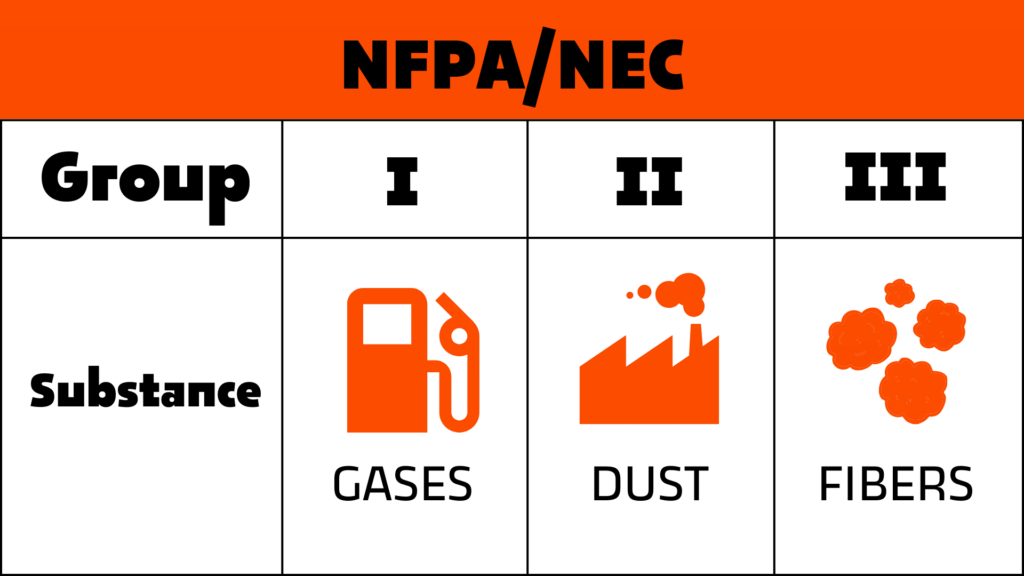
- Classifies hazardous areas into Class I (Gases), Class II (Dust), and Class III (Fibers and Flyings).
- Further divides each class into Division 1 (hazard present under normal operating conditions) and Division 2 (hazard present only under abnormal conditions like a spill or leak).
- Groups hazardous materials based on their explosive characteristics (e.g., Group A for acetylene, Group B for hydrogen).
IEC/IECEx (International) Explained
The International Electrotechnical Commission (IEC) develops global standards for electrical and electronic technologies. The IEC 60079 series specifically addresses explosive atmospheres. To complement these standards, the IECEx System provides a global framework for conformity assessment, ensuring that equipment and systems are manufactured and operated according to the highest international safety standards. An IECEx Certificate of Conformity is widely accepted as proof of compliance, simplifying international trade of intrinsically safe devices.
Key Features of IEC/IECEx
- Classifies hazardous areas into Zones based on the frequency and duration of the hazard’s presence: Zones 0, 1, and 2 for gases, and Zones 20, 21, and 22 for dust.
- Defines Equipment Protection Levels (EPLs) to indicate the level of protection provided by equipment and correlates it to the required Zone of use (e.g., EPL ‘Ga’ for Zone 0).
- The IECEx scheme streamlines certification, reducing the need for redundant testing and certification for different countries.
ATEX (EU) Explained
ATEX is derived from the French title of the EU directive 2014/34/EU: Appareils destinés à être utilisés en ATmosphères EXplosibles. It is a mandatory legal requirement for all equipment and protective systems intended for use in explosive atmospheres sold within the European Union. ATEX consists of two directives: one for manufacturers (concerning equipment) and one for employers (concerning worker safety). It uses the IEC Zone classification system as its foundation but adds its own equipment grouping and categorization requirements.
Key Features of ATEX
- Classifies hazardous areas into Zones, similar to the IEC (Zone 0, 1, 2 for gas; Zone 20, 21, 22 for dust).
- Requires equipment to be marked with the ‘CE’ and ‘Ex’ symbols to indicate compliance with EU health and safety standards.
- Divides equipment into Group I (for mining) and Group II (for surface industries), which are further divided into Categories (1, 2, 3) corresponding to the required safety level for different Zones.
Key Cross-Reference Table
While a direct one-to-one mapping is not always possible due to different philosophies, this table provides a general cross-reference between the classification systems.
| Hazard Type | NEC Division System | IEC/ATEX Zone System | Description of Hazard Presence |
|---|---|---|---|
| Gases/Vapors | Class I, Division 1 | Zone 0 or Zone 1¹ | Ignitable mixture present continuously or intermittently under normal conditions. |
| Gases/Vapors | Class I, Division 2 | Zone 2 | Ignitable mixture present only under abnormal conditions (e.g., container rupture). |
| Combustible Dusts | Class II, Division 1 | Zone 20 or Zone 21² | Combustible dust present continuously or intermittently under normal conditions. |
| Combustible Dusts | Class II, Division 2 | Zone 22 | Combustible dust present only under abnormal conditions. |
¹Division 1 encompasses both Zone 0 and Zone 1 areas. However, Zone 0 requires the highest protection level and equipment must be specifically rated for it.
²Similarly, Class II, Division 1 encompasses both Zone 20 and Zone 21 areas. Zone 20 requires the highest protection level and equipment must be specifically rated for it.
How to Choose Based on Your Region
Selecting equipment with the correct certification is critical for compliance and safety. The primary deciding factor is the geographic location where the equipment will be installed and operated.
- For the United States: In the United States, installations must comply with the version of the NEC adopted by the local Authority Having Jurisdiction (AHJ), which is the state or municipal body responsible for enforcement. Look for equipment with certifications from Nationally Recognized Testing Laboratories (NRTLs) like UL or CSA, marked with Class/Division ratings.
- For the European Union: ATEX compliance is a legal requirement. Equipment must have a CE mark, an Ex mark, and a Declaration of Conformity from the manufacturer.
- For Global Markets (outside the US/EU): IECEx certification is widely accepted and often forms the basis for national certification in many countries (e.g., Australia, Singapore, Brazil). However, always verify the specific legal requirements for the country of installation.
Many manufacturers now offer dual-certified or tri-certified products that meet NEC, ATEX, and IECEx standards, providing flexibility for multinational corporations. Always verify the specific requirements of the country and local jurisdiction. You can find many dual-certified products in our catalog.
Comparing NEC, IEC, and ATEX
While all three standards aim to ensure safety in hazardous areas, they differ in their approach and scope. The NEC focuses on the installation of electrical equipment, while IEC standards and the ATEX Directive cover a broader scope that includes non-electrical sources of ignition, such as mechanical equipment, as defined in standards like the ISO/IEC 80079 series. The IEC and ATEX use a zone system for classification, which provides a more detailed analysis of the risk level. However, the NEC’s division system is simpler and easier to understand.
What Changed in Hazardous Area Standards
Hazardous area standards are not static; they evolve to reflect new technologies, research, and safety data. It is critical for engineers, facility managers, and safety officers to work with the most current versions to ensure compliance and worker safety.
- NEC Updates: The National Electrical Code (NEC) is revised every three years by the NFPA. The latest active edition is NEC 2023, which introduced clarifications and new requirements for electrical installations in hazardous locations. Always consult the version of the code adopted by your local Authority Having Jurisdiction (AHJ).
- ATEX and Harmonized Standards: The core ATEX Directive 2014/34/EU remains the legal framework. However, the ‘harmonized standards’ (published by CENELEC) used to demonstrate compliance are regularly updated to align with the latest versions of IEC standards. This means the technical requirements for ATEX certification can change even if the directive itself has not.
- IEC/IECEx Evolution: The IEC 60079 series of standards is under continuous review. New parts are added and existing ones are amended or revised frequently. These changes can affect everything from gas detection requirements to the design of intrinsically safe circuits.
Updated Comparison of Current Options
Beyond the classification systems, the practical implementation of these standards differs significantly in terms of philosophy, documentation, and the bodies responsible for certification.
| Aspect | NEC (USA) | ATEX (EU) | IECEx (Global) |
|---|---|---|---|
| Core Philosophy | An electrical installation code focused on prescriptive rules for safety. Enforced locally. | A legal directive for EU market access, focusing on Essential Health and Safety Requirements (EHSRs). | A technical conformity assessment scheme to facilitate international trade through standardized safety levels. |
| Certification Body | Nationally Recognized Testing Laboratory (NRTL), e.g., UL, CSA, FM. | Notified Body, appointed by an EU member state. | Approved IECEx Certification Body (ExCB) and Test Laboratory (ExTL). |
| Key Documentation | NRTL Listing/Label on the product. The final installation is inspected by a local AHJ. | Manufacturer’s EU Declaration of Conformity (DoC), Technical File, CE & Ex marking. | Publicly available IECEx Certificate of Conformity (CoC), Test Report (ExTR), Quality Assessment Report (QAR). |
| Worker Safety | Covered by OSHA regulations, separate from the NEC product/installation code. | Includes the “User Directive” (1999/92/EC) which places safety duties on the employer. | Primarily a product certification scheme; worker safety is handled by national regulations. |
Frequently Asked Questions
Can equipment be certified for multiple standards?
Yes, it is common for manufacturers to seek multiple certifications for a single product to allow its use in global markets. A device might be certified for NEC (Class/Division), ATEX (Zones/Categories), and IECEx (Zones/EPLs). This dual or tri-certification is highly beneficial for companies operating across different regions.
What is the main difference between IEC and IECEx?
IEC (International Electrotechnical Commission) is the organization that writes and publishes the technical standards (like IEC 60079). IECEx is a conformity assessment system that certifies that a product meets those IEC standards through a rigorous process of testing and auditing. In short, IEC writes the rules, and IECEx verifies that the product follows them.
Is ATEX a legal requirement?
Yes, ATEX is a legal requirement based on a European Union directive. Any equipment or protective system intended for use in potentially explosive atmospheres that is placed on the market or put into service in the EU must comply with the ATEX directive and be appropriately marked.
How often are these standards updated?
The NEC is updated on a three-year cycle (e.g., 2020, 2023). The ATEX Directive itself is stable, but the underlying technical standards it references are regularly updated to align with the latest IEC versions. IEC standards are under continuous review, with new editions and amendments published as technology and safety research evolve.
What is the relationship between ATEX and IECEx?
They are closely aligned. ATEX often uses IEC standards as the technical basis for proving compliance. An IECEx certification can significantly simplify and reduce the cost of the ATEX certification process, as much of the testing data can be reused. However, a separate ATEX certificate and the required CE marking are still mandatory for placing a product on the EU market.
Understanding and complying with hazardous area standards is crucial for ensuring safety in industries that deal with flammable and explosive materials. While the NEC, IEC, and ATEX have their differences, they all provide valuable guidelines for classifying hazardous areas and selecting appropriate equipment. At Intrinsically Safe Store, we commit ourselves to help you navigate these standards and find the right safety solutions for your needs. Browse our equipment certified for NEC, IEC, and ATEX standards to learn more or talk to a hazardous area certification specialist for assistance.