


























Explosion Proof Enclosures
Showing all 16 resultsSorted by popularity
-

Condor EX700 Explosion-Proof Enclosure
$79898 -

Stainless Steel Enclosure Mounting Kit for WA/WS Boxes – Wall & Pole Bracket
$6182 -
Stainless Steel Mounting Kit for Junction Boxes – Wall & Pipe Mount (Up to 2” / 50mm)
$6182 -

Zone 1/21 MAMX-02-B3-D explosion-proof enclosure
$41200Import tariffs charged -

Eaton Crouse-Hinds EJB241808 aluminum explosionproof junction box
$19,68000 -
Eaton Crouse-Hinds EJB181208 aluminum explosionproof junction box
$9,40000 -
Eaton Crouse-Hinds EJB121208 aluminum explosionproof junction box
$6,80000 -

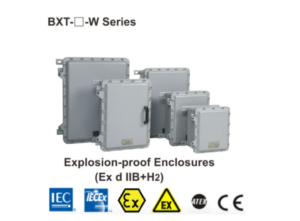
WAROM BXT- -W Series
$35500Price Depends on product option Make a selection to update priceImport tariffs charged -

Explosion Proof Junction Box IP65 Exe 220/380V
$42700Import tariffs charged -

WAROM BXT-W Series Flameproof Enclosure
$21500Import tariffs charged -

Warom Explosion‑Proof Terminal Box
$33359Import tariffs charged -
Explosion Proof EXEP1804 EX DB EB TB Switch Disconnectors
$7,89653Price Depends on product option Make a selection to update priceImport tariffs charged -
Explosion Proof EXEP0804 EX DB EB TB Switch Disconnectors
$2,33280Price Depends on product option Make a selection to update priceImport tariffs charged -
Explosion Proof EXEP0404 EX DB EB TB Switch Disconnectors
$1,16640Price Depends on product option Make a selection to update priceImport tariffs charged -
Explosion Proof EXZ1SDR02540 25A 4P+Aux Switch Disconnector
$81648Price Depends on product option Make a selection to update priceImport tariffs charged -
%22%20transform%3D%22translate(.7%20.7)%20scale(1.42578)%22%20fill-opacity%3D%22.5%22%3E%3Cellipse%20fill%3D%22%231f1702%22%20rx%3D%221%22%20ry%3D%221%22%20transform%3D%22matrix(-.54029%20-80.18117%2050.2992%20-.33893%2097.5%20115.9)%22%2F%3E%3Cellipse%20fill%3D%22%23fff%22%20rx%3D%221%22%20ry%3D%221%22%20transform%3D%22rotate(-84.3%20173.7%20-39.5)%20scale(209%2038.21718)%22%2F%3E%3Cellipse%20fill%3D%22%23fcffff%22%20rx%3D%221%22%20ry%3D%221%22%20transform%3D%22matrix(3.79373%20208.96557%20-22.9925%20.41742%2016.2%20145.5)%22%2F%3E%3Cellipse%20fill%3D%22%23f2f4f6%22%20cx%3D%22101%22%20cy%3D%22243%22%20rx%3D%22209%22%20ry%3D%2225%22%2F%3E%3C%2Fg%3E%3C%2Fsvg%3E)
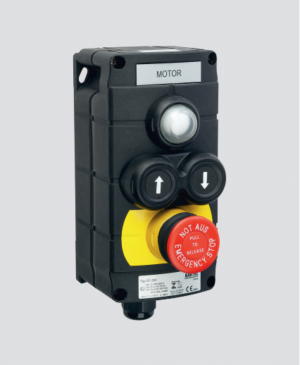
Bartec ComEx 3-Gang Control Station-Intrinsically Safe
$36764Price Depends on product option Make a selection to update priceImport tariffs charged

Understanding Explosion Proof Enclosures for Hazardous Locations
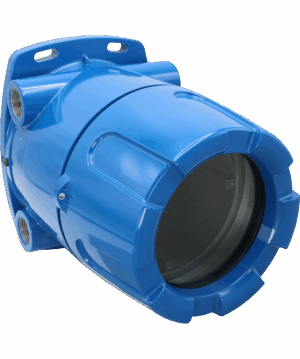
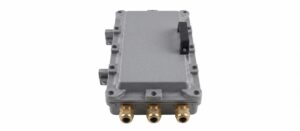
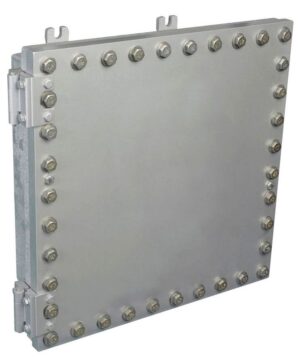
Explosion proof enclosures are critical safety components for electrical systems operating in hazardous locations. Unlike other protection methods, an explosion proof enclosure, also known as a flameproof enclosure, is not designed to be gas-tight. Instead, its primary function is to contain an internal explosion that may occur from a spark igniting flammable gases or vapors that have entered the enclosure. The robust construction is engineered to withstand the force of this internal blast and, crucially, to cool any escaping hot gases through precisely machined joints or ‘flame paths’. This cooling action prevents the ignition of the surrounding hazardous atmosphere, thereby protecting personnel and infrastructure.
It is essential to distinguish between ‘explosion proof’ and ‘intrinsically safe’ systems. While both are used in hazardous environments, they operate on different principles. Intrinsically safe equipment is designed to be low-energy, incapable of producing a spark or thermal effect sufficient to cause ignition. An explosion proof enclosure, however, houses standard electrical equipment that could create an ignition source, and it manages the risk through containment. Selecting the correct type of protection depends on the specific application, power requirements, and the nature of the hazardous environment.
Key Features, Materials, and Classifications of Explosion Proof Enclosures
The reliability of an explosion proof enclosure stems from its design, materials, and adherence to strict certification standards. Understanding these elements is key to ensuring proper selection for your application.
Robust Construction and Materials
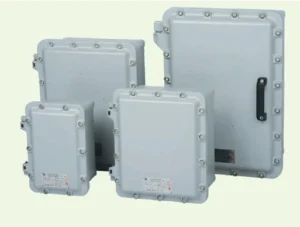
Explosion proof electrical boxes are built to last in the most demanding industrial settings. They are typically manufactured from materials like copper-free cast aluminum, which offers excellent durability and corrosion resistance, or stainless steel for superior performance in highly corrosive environments like marine or chemical processing facilities. The design features thick walls and either flanged or threaded joints that create the flame path, a critical element in cooling and venting explosion gases safely.
Hazardous Location Classifications
To be effective, an enclosure must be rated for the specific hazardous environment it will be used in. In North America, the National Electrical Code (NEC) defines these areas using a Class and Division system.
- Class I: Locations where flammable gases or vapors are, or may be, present in the air in quantities sufficient to produce explosive or ignitable mixtures.
- Division 1: Areas where ignitable concentrations of hazards exist continuously, intermittently, or periodically under normal operating conditions.
- Division 2: Areas where ignitable concentrations of hazards are handled, processed, or used, but are normally confined within closed containers or systems from which they can escape only in case of accidental rupture or breakdown.
Our selection includes enclosures certified for the most stringent environments, such as Class 1, Division 1, ensuring the highest level of protection where it’s needed most.
Essential Features and Fittings
Modern explosion proof enclosures can be configured with various features to meet project requirements. Options often include factory-installed hinged covers, mounting plates, and certified viewing windows for monitoring internal components without compromising safety. It is critical to note that the integrity of the entire system relies not just on the enclosure but also on the correct use of certified explosion proof fittings, conduit, and seals for all electrical entries. Any modifications, such as drilling, must be performed by a certified entity to maintain the product’s safety rating.
FAQs
What is the difference between an explosion proof and an intrinsically safe enclosure?
An explosion proof enclosure is designed to contain an internal explosion and prevent it from igniting the surrounding atmosphere. An intrinsically safe system, on the other hand, limits electrical and thermal energy to a level below what is required to ignite a specific hazardous atmospheric mixture. They are fundamentally different safety concepts; explosion proof is about containment, while intrinsic safety is about prevention.
What does Class 1, Division 1 mean for an enclosure?
A Class 1, Division 1 rating signifies that an enclosure is certified for use in an area where flammable gases or vapors (Class 1) are present continuously or intermittently under normal operating conditions (Division 1). This is one of the most hazardous location ratings, requiring the highest level of protection.
Can I drill holes in an explosion proof enclosure myself?
No. Any unauthorized field modifications, including drilling holes for conduit or fittings, will void the enclosure’s certification and compromise its safety integrity. All machining and modifications must be performed by the original manufacturer or a UL-certified shop to ensure compliance with safety standards.
What materials are explosion proof electrical boxes made from?
Explosion proof enclosures are typically constructed from robust, durable materials capable of withstanding internal pressure and corrosive environments. The most common materials are copper-free cast aluminum, known for its balance of strength and weight, and stainless steel, used for its exceptional resistance to corrosion in harsh chemical or marine environments.
What is a flameproof enclosure?
The term ‘flameproof’ is often used interchangeably with ‘explosion proof’. Specifically, ‘flameproof’ (Ex ‘d’) is the designation used under international standards like ATEX (Europe) and IECEx. It refers to the same principle of protection as ‘explosion proof’ under North American standards: containing an internal explosion and cooling escaping gases to prevent external ignition.